
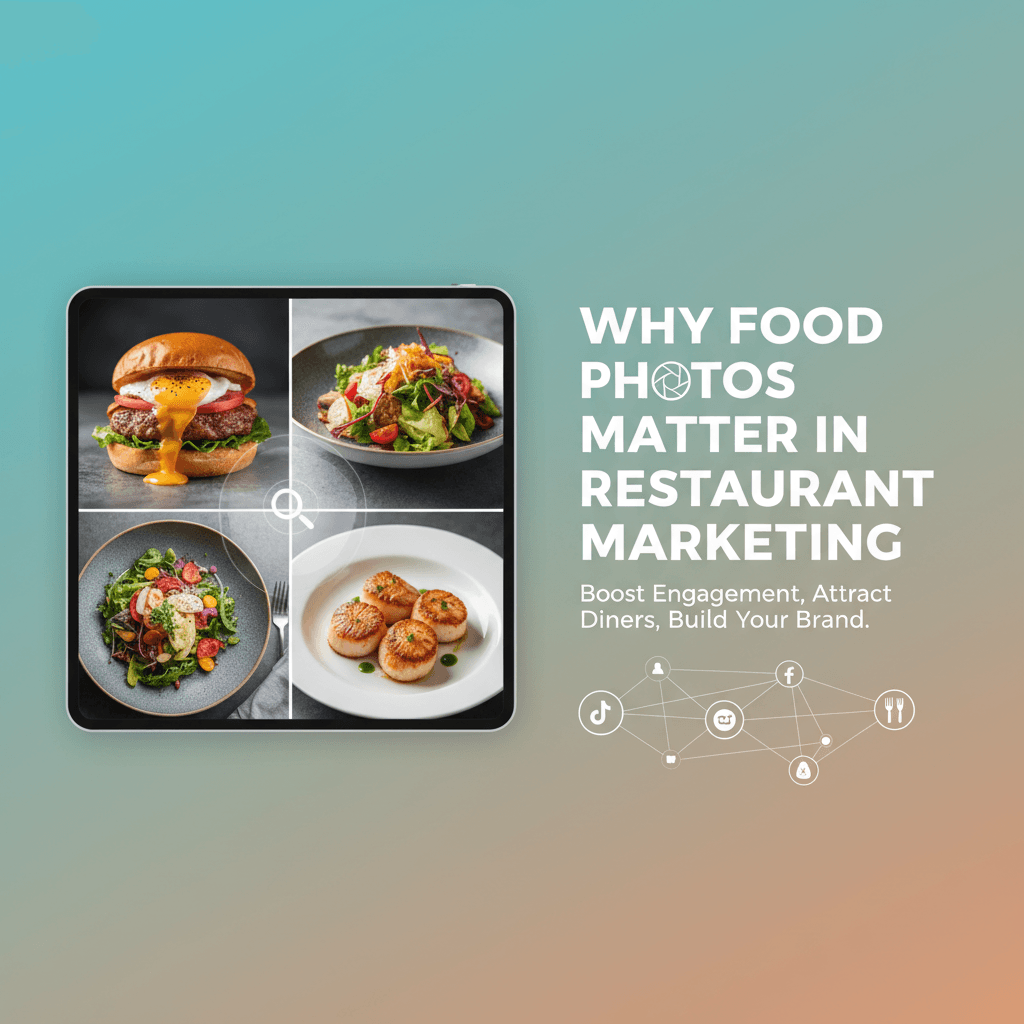
Why Food Photos Matter in Restaurant Marketing
In the digital age, the old saying "we eat with our eyes first" has never been more true. Before a customer tastes your food, they see it—on your website, on social media, or on a delivery app. That first visual impression is a critical touchpoint in their journey. High-quality food photography is no longer a luxury for restaurants; it's an essential ingredient for a successful marketing strategy.
The Power of Visual Appetite
A picture is truly worth a thousand words, especially when it comes to food. A vibrant, well-composed photo can instantly evoke feelings of hunger and desire. When potential customers scroll through their feeds, a stunning image of your signature dish can stop them in their tracks, trigger cravings, and create a powerful incentive to visit or order. This psychological connection between seeing delicious food and feeling hungry is the cornerstone of visual restaurant marketing.
Key Benefits of Professional Food Photos
Investing in professional-quality images provides a significant return across all your marketing channels. Here’s how it directly impacts your business:
- Boosts Social Media Engagement: Platforms like Instagram are visual-first. Mouth-watering photos are highly shareable, attracting more likes, comments, and followers. An "Instagrammable" dish can generate organic buzz and user-generated content, turning your customers into brand ambassadors.
- Increases Online Orders: For websites and third-party delivery apps, menus with high-quality photos see significantly higher conversion rates. When a customer can see exactly what they're ordering, it removes uncertainty and makes menu items more appealing, often leading to a higher average order value.
- Builds Brand Identity and Trust: Professional photos signal quality and attention to detail. They help tell your brand's story, showcase the freshness of your ingredients, and build a perception of a high-quality establishment. Inconsistent, low-quality images can do the opposite, deterring potential diners.
- Improves SEO and Website Traffic: Optimized images can rank in Google Images search, driving a new stream of traffic to your website. Using descriptive alt text with your photos (e.g., "spicy chicken ramen bowl with soft-boiled egg") helps search engines understand your content, improving your overall restaurant SEO.
Quick Tips for Better Food Photos
While hiring a professional is always recommended for key marketing assets, you can elevate your own photos by following a few simple rules:
Use Natural Light
Natural light is a food photographer’s best friend. Avoid using a harsh, direct flash. Instead, take photos near a window to capture soft, appealing light that makes the food look fresh and delicious.
Focus on Composition and Styling
Think about the arrangement. Use the rule of thirds, experiment with different angles, and use simple props like fresh herbs or a clean napkin to add context. The goal is to make the dish the hero of the shot.
Highlight the Details
Get close to capture the textures and details that make a dish special—the melted cheese, the perfect sear on a steak, or the steam rising from a bowl of soup. These details are what make viewers feel hungry.
Conclusion: A Non-Negotiable Marketing Tool
In today's competitive market, you can't afford to neglect your visual presentation. Professional food photography is a powerful tool that directly influences customer perception, drives sales, and builds a strong brand. It's an investment that works for you 24/7 across your website, social media, and online ordering platforms. By showcasing your culinary creations in the best possible light, you invite customers to experience your food before they even step through the door.