
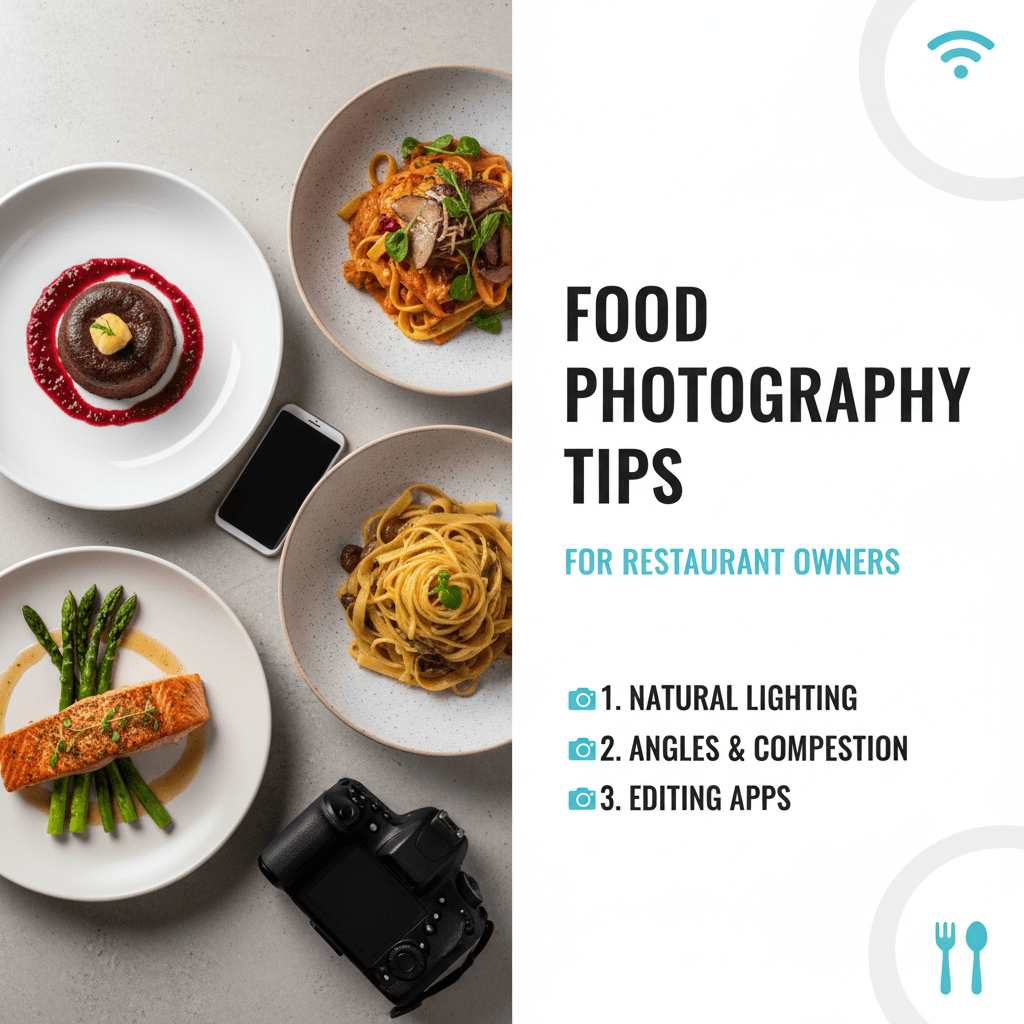
Food Photography Tips for Restaurant Owners
Published on April 8, 2026 by BD Agency
In today's digital age, your customers often "eat with their eyes" long before they step foot in your restaurant. High-quality photos on your website, social media, and delivery apps are no longer a luxury—they're a necessity. A stunning photo can be the deciding factor for a potential diner. But you don't need to hire a professional for every shot. Here are some essential food photography tips to help you capture mouth-watering images that do your dishes justice.
1. Embrace Natural Light
The single most important element in food photography is light. Natural light is your best friend because it creates soft, appealing shadows and brings out the true colors of your food. Avoid using your camera's built-in flash or harsh overhead kitchen lighting, which can create unappetizing glares and color casts.
- Do: Set up your shot near a large window during the daytime.
- Don't: Shoot in direct, harsh sunlight. If the light is too strong, diffuse it with a thin white curtain or a piece of white parchment paper.
2. Master Composition and Styling
How you arrange the food and props in your frame is crucial. A well-composed shot tells a story and guides the viewer's eye. Don't just place a plate in the middle of the frame; get creative with your food styling and composition.
Key Composition Techniques:
- The Rule of Thirds: Imagine your frame is divided into a 3x3 grid. Place your main dish on one of the intersecting lines for a more dynamic and balanced photo.
- Tell a Story: Add props that make sense, like a glass of wine, fresh ingredients, or unique cutlery. These elements add context and make the scene more inviting.
- Angles Matter: Experiment with different angles. An overhead or "flat lay" shot is great for bowls and pizzas, while a 45-degree angle works well for burgers and sandwiches to show their height and layers.
3. Focus on Freshness
Photography captures a single moment, so make sure that moment is perfect. Your food should look as fresh and appetizing as possible. This means working quickly and paying attention to the small details that signal fresh ingredients.
- Add garnishes like fresh herbs, a sprinkle of cheese, or a drizzle of sauce right before you shoot.
- For hot dishes, try to capture a wisp of steam to convey warmth and freshness.
- Use a small spray bottle with water to add a look of freshness to salads or vegetables.
4. Use Simple, Uncluttered Backgrounds
The star of the show is your food, so the background should support it, not compete with it. A busy, cluttered background can distract the viewer. Opt for simple backgrounds that complement the dish.
Think about using neutral surfaces like a dark slate, a rustic wooden table, or a clean white plate. These textures add interest without overpowering the main subject.
5. You Don't Need a Fancy Camera
While a DSLR offers more control, modern smartphones have incredibly capable cameras. You can take stunning photos with the phone in your pocket by mastering its features. A key tip for smartphone food photography is to always clean your lens before shooting!
- Use "Portrait Mode" to create a soft, blurred background (bokeh) that makes your dish pop.
- Tap on your screen to set the focus directly on the most important part of the dish.
- Avoid using the digital zoom, which degrades image quality. Instead, move your phone closer to the subject.
6. Learn Basic Photo Editing
A little bit of post-processing can elevate a good photo to a great one. Photo editing helps you correct colors and enhance details to make the food look as delicious as it tastes. You don't need complex software; mobile apps are powerful and user-friendly.
Simple Edits to Make:
- Brightness & Contrast: Make the image brighter and increase contrast to make it pop.
- Saturation & Vibrance: Slightly boost these to make the colors more vivid, but be careful not to overdo it.
- Sharpening: Apply a subtle sharpening effect to bring out the textures of the food.
Popular apps like Snapseed, Adobe Lightroom Mobile, and VSCO offer easy-to-use tools for these adjustments.
Conclusion: Start Snapping!
Great restaurant photography is a powerful marketing tool that can drive traffic and increase sales. By focusing on good lighting, thoughtful composition, and simple editing, you can create professional-looking images that capture the essence of your cuisine. Start practicing with these tips, and watch as your delicious dishes begin to attract the attention they deserve online.